

Vanderbilt University School of Medicine is one of the newest grantees of the American Academy of Developmental Medicine and Dentistry (AADMD) initiative to engage people with intellectual and developmental disabilities (IDD) in medical student education.
Because traditional medical education includes little or no training on caring for people with IDD, AADMD created the National Inclusive Curriculum for Health Education-Medical (NICHE-Med), a collective of medical schools and community organizations aiming to improve care of people with IDD across the lifespan.
NICHE-Med projects are unique to each school and community, reflecting local resources and interests. Through their grant, Vanderbilt Health’s Emily Tarvin, M.D., and Tiffany Hines, M.D., are partnering with Backlight Productions to engage adults with IDD in medical student training through the Vanderbilt Center for Experiential Learning and Assessment https://www.vumc.org/cela/about-us. Backlight Productions is an inclusive theater company based in Franklin, TN, which showcases exceptional talent of performers with IDD.
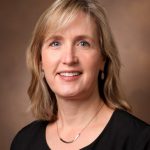
Tiffany Hines, M.D.
“This project is a win-win for everyone,” said Hines. “Medical students learn new skills and receive feedback. Adults with IDD learn the job skill of standardized patient performance. Both groups have the chance to shape the future of health care. Most of all, the greater medical community benefits by providing compassionate skilled physicians to care for the aging population of people with IDD in our community.”
Since 2024, Tarvin and Hines have co-led a medical school elective titled Disability Competent Care, providing third- and fourth-year medical students with clinical and classroom-based education about caring for people with disabilities, including IDD, as well as physical, neurological, and sensory disabilities. Emphasizing lived experience from people with disabilities, the course also examines ableism, health care challenges, and interactions among people with disabilities and health care systems.
Since NICHE-Med began in 2017, 50 medical schools have become NICHE-Med partners. Adult-focused medical education often has little or no specific training on caring for people with IDD, which contributes to gaps in health care for this population. The NICHE-Med program is an effort to address those gaps.
Top photo by Adobe Stock
