
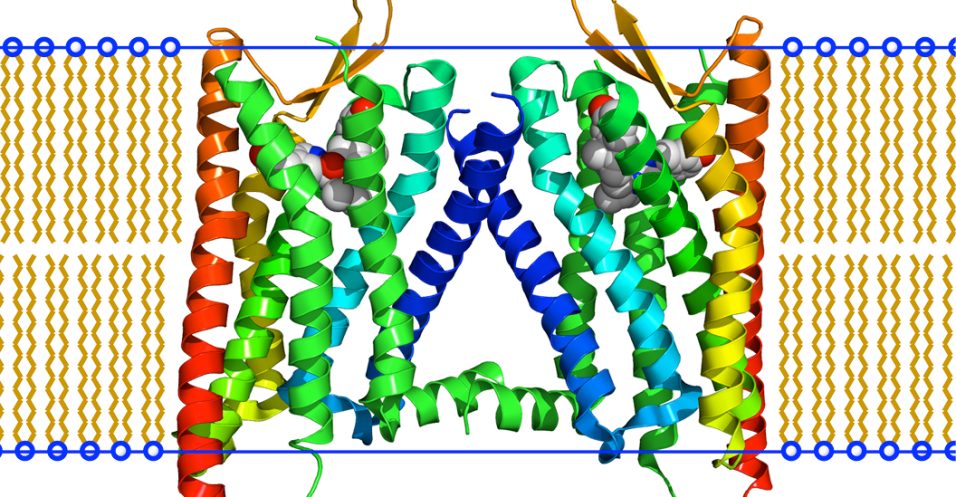
Since 1976, researchers have been investigating a brain system called the kappa opioid receptor system (KOR). It has been linked to how we experience stress, pain, learning, motivation, and drug use. A long‑standing belief in neuroscience has been that this system primarily generates negative feelings such as emotional discomfort, stress, and aversion, and that blocking it might relieve depression or addiction.
Now, a National Institutes of Health funded review* by Vanderbilt Kennedy Center investigator Cody Siciliano, Ph.D., an assistant professor of pharmacology, and his colleague Zahra Farahbakhsh, a graduate student in neuroscience, have taken a fresh look at decades of research and argue that this popular view is too simple. By carefully reexamining both classic and modern studies, they show that the KOR system behaves in far more complex and sometimes surprising ways.

Cody Siciliano, Ph.D.
“The kappa opioid receptor is part of the same family of receptors affected by opioid painkillers like morphine,” said Siciliano. “However, it works very differently from the receptors associated with euphoria and addiction. The kappa receptor is activated by a natural brain chemical called dynorphin and is found throughout the brain in areas involved in motivation, emotion, and decision‑making. Because drugs that act on this receptor are not strongly addictive, researchers have hoped they might be useful for treating conditions such as depression, anxiety, and substance use disorders. However, our new understanding may explain why many promising drugs based on older theories have failed in human trials.”
Early studies seemed to support the conclusion that activating the kappa opioid receptor caused unpleasant experiences. In animal studies, certain kappa‑activating drugs made animals avoid places where they had received the drug. In people, high doses of these drugs sometimes caused anxiety, confusion, or hallucination‑like effects. Dynorphin levels were also found to rise during stress and drug withdrawal. Together, these findings led to the widespread belief that the kappa system exists mainly to generate negative emotional states and counteract pleasure.
But Siciliano points out that the story becomes much messier when the full body of evidence is considered.
“Many results do not fit neatly into the idea that the kappa system simply produces bad feelings,” said Siciliano. “Some kappa‑acting drugs are actually self‑administered by animals, which usually indicates a rewarding effect. In certain brain regions, activating kappa receptors leads to preference rather than avoidance. Even dynorphin itself, which is the chemical long assumed to be a built‑in stress signal, can sometimes act as a positive reinforcer, depending on where and how it is released.”
He says the location within the brain is critical. Activating kappa receptors in one region may promote avoidance or anxiety, while activating them in another region may support learning, motivation, or calming effects. This means the kappa system cannot be understood as having a single emotional function. Instead, it appears to play different roles depending on the neural circuit involved.
Dose also matters greatly. Many of the most unpleasant effects associated with kappa‑acting drugs occur only at very high doses and the levels overwhelm the brain and cause distorted perceptions.
“Nearly all brain systems can produce distress or confusion when overstimulated,” said Siciliano. “That does not mean distress is their normal, everyday purpose. At lower doses, kappa‑activating drugs often produce sedation or reduced arousal without obvious dysphoria (unease).”
Siciliano says the role of dynorphin itself is also more complicated than previously thought. Dynorphin is not a single chemical but a family of related fragments, many of which can act on multiple receptor systems, not just the kappa receptor. Some dynorphin fragments even act through non‑opioid mechanisms. As a result, past experiments may have unintentionally mixed together multiple biological effects while attributing them all to a single pathway.
Based on this broader view, the investigators propose a different way of thinking about the KOR. Rather than encoding “bad feelings” specifically, the system may help regulate how strongly both positive and negative experiences influence future behavior. In this view, kappa receptors shape learning, novelty, and behavioral flexibility, tuning how the brain responds to new or changing situations instead of simply dampening pleasure.
Siciliano says this shift in perspective has important implications for medicine and medications.
“Many clinical trials failed not because animal research was misleading, but because the underlying theory guiding drug development was incomplete,” said Siciliano. “If the kappa system does not directly control mood, then drugs designed to block it may not reliably improve depression. On the other hand, targeting this system may still be useful for more specific problems, such as reduced motivation, difficulty experiencing interest or novelty, or certain learning‑related symptoms.”
“Ultimately, this review is a reminder that brain biology rarely fits into tidy categories. Progress often requires revisiting old assumptions, acknowledging contradictions, and letting the full complexity of the data guide new ideas forward.”
* Farahbakhsh, Z.Z., Siciliano, C.A. Kappa opioid receptor control of motivated behavior revisited. Neuropsychopharmacol. (2025). DOI: 10.1038/s41386-025-02226-9
Pictured top of page: structure of the human kappa opioid receptor. Image by Boghog, CC BY-SA 3.0, via Wikimedia Commons

